Choosing the Right Service for Your Funeral: Because One Size Doesn't Fit All
Here's something nobody tells you: "funeral" isn't a single, fixed thing. It's a category, like "dinner." A funeral can be a solemn cathedral affair with incense and organ music, or it can be a backyard gathering with a cooler of drinks and someone's questionable slideshow. Both count. Both can be exactly right.
The problem is, if you don't decide what kind of send-off you want, someone else will guess—and grief makes people default to whatever feels "safe" or "proper," which may have nothing to do with who you actually were.
So let's talk about your options. No wrong answers here, just the one that sounds most like you.
First, the Big Distinction: Funeral vs. Memorial
People use these interchangeably, but there's a difference worth knowing.
A funeral is typically held with the body present, usually within a week or so. It tends to be more structured and happens fast, which can be comforting or stressful depending on your family.
A memorial service happens without the body present, and can be held weeks or even months later. This gives people time to travel, breathe, and plan something less rushed. If half your loved ones live across the country, a memorial might be the kinder choice.
Neither is more "real" than the other. It's about timing and what your people can handle.
The Traditional Religious Service
If faith is central to who you are, a service rooted in your religious tradition can offer enormous comfort—not just to you (in advance), but to everyone gathered. The prayers, the rituals, the familiar words: they exist because they work. They hold people up when they can't hold themselves.
If you want this, say so clearly. Note your faith, your place of worship, and any specific readings, hymns, or customs that matter to you. Clergy appreciate guidance, and your family will be grateful not to guess.
The Celebration of Life
This is the fast-growing favorite, and for good reason. A celebration of life flips the script: instead of focusing on the loss, it focuses on the life. Think photos everywhere, your favorite food, and stories that make people laugh until they cry (and cry until they laugh).
These work beautifully for people who hated stuffiness in life and would hate it in death too. You can hold one anywhere—a community hall, a winery, your own living room. The only rule is that it feels like a party you would have actually attended.
The Secular or Humanist Service
Not religious, but still want structure and meaning? A secular or humanist service offers ceremony without the scripture. A celebrant works with your family to craft something personal—readings, music, reflections—centered on your life and values rather than a particular faith.
It's a lovely middle ground for people who want gravity and ritual without the religious framing.
The Graveside or Committal Service
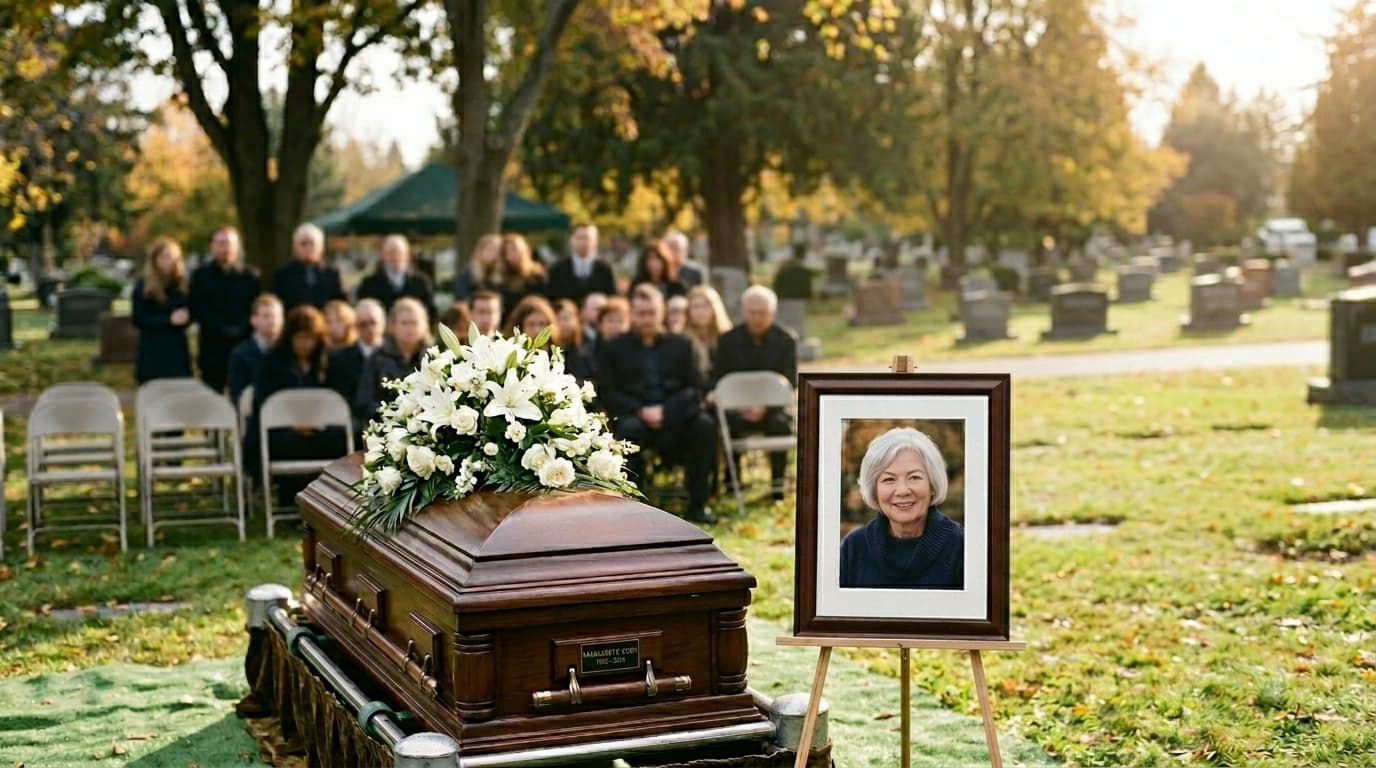
Short, simple, and held right at the burial site. Sometimes this is the whole service; sometimes it follows a larger gathering. If you're a "keep it small and no fuss" kind of person, a graveside service might be all you want—a handful of people, a few words, and a goodbye under the open sky.
The Direct Option (Plus a Gathering Later)
Increasingly, people choose direct cremation or burial—no formal service at the time—and then leave instructions for a separate gathering whenever the family is ready. This separates the logistics of death from the celebration of life, which can take enormous pressure off everyone.
If this appeals to you, just make sure you tell people that's the plan. Otherwise your family may panic, thinking they've failed to "do it properly." Reassure them in advance: this is the plan, and it's a good one.
A Few Things Worth Deciding Now
- Open casket, closed, or none at all? People have strong feelings. Spare your family the debate.
- Who speaks? Name the people you'd want to give a eulogy—or specify that you'd rather have open-mic storytelling.
- Where? A church, a funeral home, a park, your backyard. The venue sets the entire tone.
- How big? An intimate gathering of ten, or a packed house of two hundred? Both are valid; just say which.
The Part That Actually Matters
Choosing the type of service isn't about getting it "right." It's about leaving your people a map instead of a maze. When they're standing in the worst week of their lives, the last thing they need is to argue over whether you'd have wanted a Mass or a margarita.
So picture it. The room, the people, the feeling you want them to leave with. Then write it down, tell someone, and let it go.
That's not morbid. That's one final act of hosting—making sure that even at the very end, your guests know exactly where to sit, what to expect, and how very much you thought of them.